I always find myself thinking of what I can do as a final project in classes and I usually find myself coming back to the same 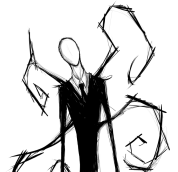 subject. Others who have taken classes with me in the past are probably sick of what I’m about to propose, but my critical photo essay is going to be within the realm of digital folklore and the horrors therein.
As a short horror writer I am no stranger to the ‘scary stories’ that one comes across online. I’m a subscriber to the creepypasta wiki, the reddit forum r/nosleep, and am a fan of several short horror narrators. I’m also no stranger to the news that surrounds these types of stories. Online horror forums have become the 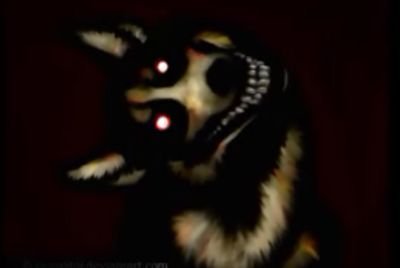 breeding ground for news stories warning parents of the dangers of being involved in these stories as well as real life crime being committed in their name.
My goal with this project is to explore how the writing of a creepypasta has grown out of longer fictions, like those of Stephen King, and how it has become applicable for such a large audience. What used to be scary stories to just tell in the dark have evolved into something that is readily available at every time of day and has had to adapt to be quickly read and, more importantly, quickly written. My question to be researched is:
“How has the written horror story changed over time to adapt to the ever changing, growing, and more technologically adept world?”
“Why is this important to you?” or “Again, Kas? You’ve done this project so many times already, why again?” are questions that may be crossing  your mind. It isn’t that I do the same project over and over again, but that I continue to expand my knowledge and understanding of a topic. This is important because this is what I do. As a horror writer it is my job to know how the genre is evolving and how I can properly apply my abilities. With a world like ours I know that in order to be at the top of my game and to be continue to be relevant in a quickly changing genre I need to know these things to help predict future moves.
I’ve done so preliminary research for this project, specifically, within the following sources:
The Genre of Horror by Mgr. Viktória Prohászková
(http://www.aijcrnet.com/journals/Vol_2_No_4_April_2012/16.pdf)
This thesis is about the horror genre, outlining it, and describing the dominant features of the genre and variations of content. It provides a brief overview of the development process in the realm of literature, film, and computer games; outlining its appearance in other fields of culture and art. It characterizes the readers and viewers of horror the horror genre and their motives for seeking the genre. This is important to my piece as it helps shed light on the workings of the genre and how it goes about defining subgenre and application.
How To Write A CreepyPasta
(http://creepypasta.wikia.com/wiki/Creepypasta_Wiki:How_to_Write_Creepypasta)
I include this website because it is important that I study how the writing process between the different stories has changed over time. It discusses what types of fear an author can subscribe their story too and characterizes the narrator as someone giving a first person account of a true story. Creepypastas have helped the genre evolve to being a first person experience from the third person narrative (thinking along the lines of IT, Ringu, or At The Mountains of Madness; which are all told from the third person).
The Lure of Horror by Dr. Christian Jarrett
(https://thepsychologist.bps.org.uk/volume-24/edition-11/lure-horror)
Though the Critical Photo Essay isn’t a paper on psychology, understanding the psychology of what draws someone into the horror-sphere will aid in the accuracy and the pinning down of why people are interested. This essay gives information on why people engage with the things that scare them and theories on meta-emotion. The essay also talks on Dr. Norbert Mundorf and his studies into the slasher films of the 80s and 90s. The reference section of this essay is also very vast and will aid in further research.
Limits of horror by Fred Botting
(Montana State University Library, 3rd Floor)
This book delves into the history of monsters and ghosts and how the have evolved over the last 200 years, as well as the means of conveyance that have evolved with them (from fiction to film to video games). This book includes the evolution from gothic to cybergothic and looks at the range of literary, cinematic, and popular culture while examining the changes of the genre and the questions they pose for understand contemporary culture. This book also examines concepts like the uncanny, the sublime, terror, shock, and abjection in terms of the bodily implications. It advance current critical and theoretical debates on gothic horror and proposes a new theory of cultural production based on Freud’s idea of the ‘death drive’.
“Spread the Word”: Creepypasta, Hauntology, and an Ethics of the Curse by Line Henriksen
(https://muse.jhu.edu/article/689102/pdf)
This article deals mostly with one of the original creepypastas, Smile.dog, and the ideas behind haunted email chains; as well as digital urban legends. This article goes on to explore modern ethics in a digital world. Through the lens of Jacques Derrida’s concept of hauntology– a haunted ontology– this article explores what digital monsters and curses may teach us about those ethics as a question responding to that which haunts and hoaxes.



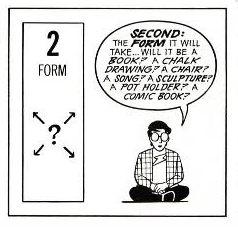


 someone to understand passing emotion. Sure someone may look disappointed for eight frames, but as soon as the face changes in frame 9 we know the characters mood has changed. We don’t need to see the actual movement of the face. When a mood gets progressively worse I’d say that is how emotion is incorporated into the motion of time in a comic. Like a character going from confused, to angry, to embarrassed (I actually couldn’t find a comic that emulated this but I’m typing this through some wicked cold medicine and just want to go back to bed).
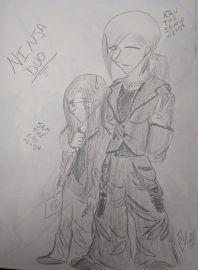


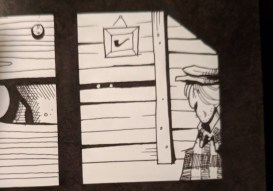
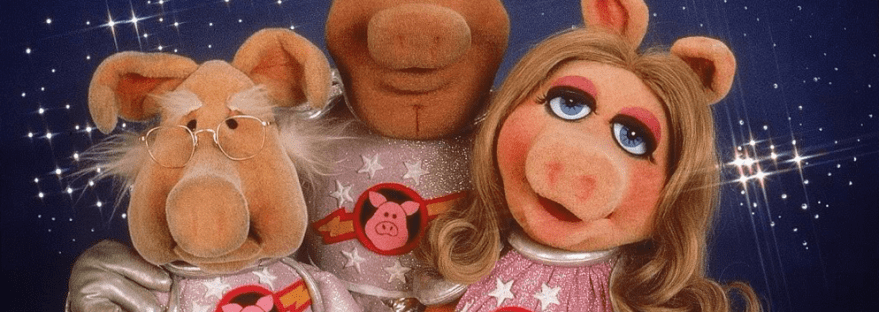

 I do appreciate that the note points out that the authors are aware that the drawings are of white and middle class people; as if they are acknowledging the lack of people of color and people that come from different classes and strive to be more like the Muppets.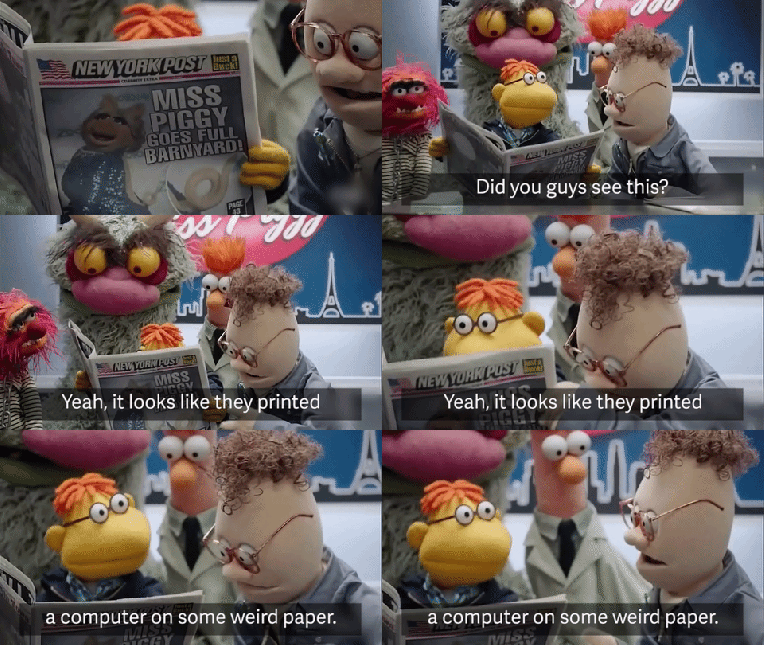
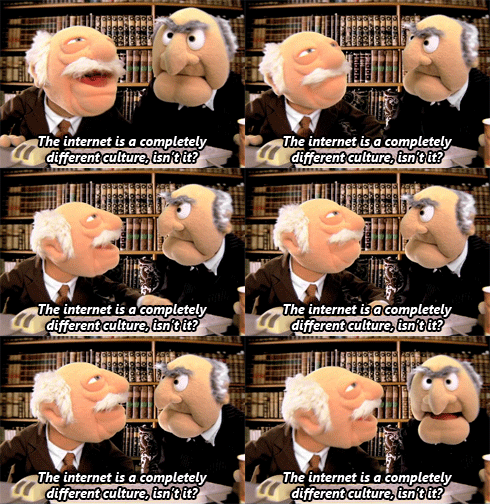 hands and the weight of it. Then I realized I hadn’t read a book in months, those around me had read several on their kindle, nook, or other e-reader from 2010 when the world was young. That’s when it struck me that it doesn’t matter how you read, just that you do it. Sure the technology may evolve, but it is evolving to help people read more.
 It was a bunch of students at Columbia that ruin the fun of photocopying dollar bills. I know a firehouse in my home town that photocopied a 100 dollar bill on their new copier and had to call the company to get it reset. How many calls a day do you think they get about that very thing?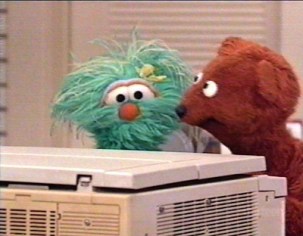



 projects were taking up before. When I stop and think about it, it’s rather interesting. I start out with the canvas being my brain and thoughts (not always mutually exclusive). From there is moves to, usually, jotting ideas down on whatever appendage I have that isn’t currently being used. Then, if I develop it enough, it starts to take shape on sticky notes and other miscellaneous papers. I may have never finished a big writing project, but I’ve kept every envelope, every receipt, and every gum wrapper that I’ve brainstormed on. In the event of a film project, I do branch that out into a storyboard type deal; nothing sleek, as I’m not the best artist, but I like to sit down with a set of brush pens and just paint until I’m out of ideas. Rarely are the paintings related to my actual idea. Like the picture to the right. It’s a picture of the road around Hungry Horse Reservoir, when the soil becomes more oxidized and the clay is thicker. My mother ran her last Ultra-Marathon on this road. But I didn’t put it down on paper until I was brainstorming for a project I’m doing in another class.


 desired outcome. The desired outcome for one is to allow women the choice and, for the other, to bring children into the world regardless of choice (but let me not get overtly political here). These are important because every one member of the public has a right to an opinion.

 The Half Ginger
You must be logged in to post a comment.